The Leadership Trap of “Point and Shoot”
During the holidays, my youngest son, Alex, walked up to me with a new digital camera and a simple request:
“Can you teach me how to use this?”
We covered the basics, just enough to get him moving. ISO. Aperture. Shutter speed. Lighting.
Then we got to the part that makes a photo meaningful: framing.
Back in high school and college, I had the good fortune to learn from a few exceptional photojournalists, people who didn’t just take pictures, they captured moments. They drilled one lesson into me that mattered more than any knob or dial:
Don’t just stand there and shoot.
Move. Physically and mentally. Search for the angle that reveals the real story.
Because perspective isn’t only where you stand. It’s what you decide matters.
As Alex and I talked, three images came to mind, ordinary scenes that become instructive the moment you stop treating them like snapshots. They also come with a leadership warning label.
Too many of us operate with a “point and shoot” mindset at work. We react to what’s directly in front of us, from our default vantage point, with incomplete information. It shows up as a quick directive in a tense Slack thread. A decision made from a dashboard without talking to the people doing the work. A rollout judged “resisted” when the real issue is capacity, incentives, or trust.
Leadership gets better when you add one more ingredient: context.
Perspective is the angle. Context is the surroundings, history, incentives, constraints, and power. Who can speak freely, who absorbs risk, who gets blamed when something goes wrong.
Without both, you can be confident and still be wrong.
Here are the three images, and the leadership lessons they’ve been quietly trying to teach.
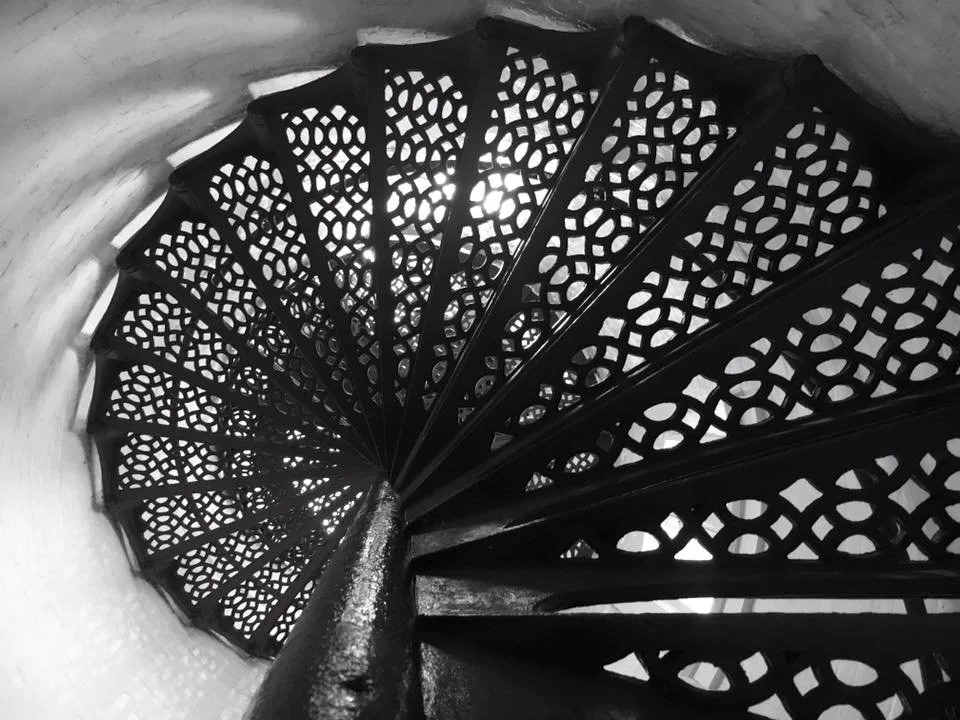
1) Spiral stairway in the lighthouse tower
What you see:
A spiral staircase climbing inside a lighthouse. Curving lines. Repeating steps. A view that shifts as you rise.
What it means:
Perspective changes with elevation. The higher you go, the more pattern you see. The lower you are, the more friction you feel.
Neither view is “right.” Each is incomplete without the other.
Leadership trap (“point and shoot”):
From the top of the stairs, strategy looks clean. The plan is elegant. The timeline is reasonable. The tradeoffs look obvious.
From the steps, execution feels different. Dependencies show up. Exceptions multiply. The “simple” change takes ten hidden steps.
Leaders often live at the top. Teams live on the steps. Leadership isn’t picking one view. It’s translating between them.
Ask this:
What’s harder down there than it looks up here?
Or even more simply: What does this look like from three steps below me?
One move you can make today:
Before you label a team as “slow” or a function as “resistant,” talk to one person closest to the work and ask:
What part of this is more complicated than leadership realizes?
2) Snow fence and its shadow

What you see:
A simple fence in the snow, and a shadow that changes its shape and drama depending on the angle of the light.
What it means:
Sometimes we react to the shadow of an issue, assumptions, legacy perceptions, rumors, fear.
The shadow isn’t fake. But it isn’t the full truth either.
Leadership trap (“point and shoot”):
Organizations carry history. A prior crisis. A messy rollout. A leader’s reputation. A metric used the wrong way. A half-remembered email that taught people it’s safer to stay quiet.
So when you announce something new, people may not be reacting to this decision. They may be reacting to what it resembles, or what it has meant before.
And here’s the part leaders often miss: context includes power. Some people can question the plan safely. Others can’t. Silence isn’t always agreement. It’s sometimes self-protection.
Ask this:
What story is history telling people right now?
Or: What is the light source shaping this reaction, past experience, incentives, or missing information?
One move you can make today:
In any moment of “pushback,” replace your first instinctive label with a better question:
I might be missing context. What does this remind you of, and why?
3) Ground-level mushrooms in a field

What you see:
Mushrooms at ground level, easy to miss unless you slow down and change your posture.
What it means:
The most important signals are often small, early, and quiet. And mushrooms don’t appear randomly. They’re evidence of conditions you can’t see at eye level, moisture, decay, ecosystem.
Leadership trap (“point and shoot”):
Early warning signs at work often look “minor.” A repeated question. A workaround. A drop in meeting participation. A tool nobody uses. A process people quietly avoid.
Those aren’t annoyances. They’re data.
When something “minor” keeps repeating, it’s rarely minor. It’s a symptom of system conditions, workload, friction, unclear decisions, misaligned incentives, or eroding trust.
Ask this:
What system condition is this symptom proving?
Or: What conditions produced this signal?
One move you can make today:
Pick one small recurring frustration and treat it like a signal, not noise. Ask:
If we fixed the underlying condition, what would stop being necessary?
Tying it together: a leadership habit
Taken together, these images form a simple reminder:
The lighthouse stairway says your view changes with altitude. If you only lead from the top, you’ll misread effort. If you only live on the steps, you’ll miss the pattern.
The snow fence adds a caution: what people react to isn’t always the thing itself. It’s the shape it takes under pressure, history, incentives, and power.
The mushrooms bring it home: the earliest signals are often the smallest. If leaders want early warnings, they have to create conditions where people can point them out without fear.
This is the habit I’m trying to practice more deliberately:
Climb. Check the shadow. Get low.
Before you decide. Before you message. Before you label the problem.
Try it this week with one situation you’re tempted to “point and shoot” your way through, a disagreement, a stalled decision, a rollout that isn’t landing.
Ask three questions:
Steps: What’s harder down there than it looks up here?
Shadow: What story is history telling people right now?
Mushrooms: What system condition is this symptom proving?
Then do one small action:
Walk the steps: talk to a doer and map the hidden dependencies.
Move the light: find the origin story shaping the reaction.
Kneel down: trace a small recurring friction to its root condition.
Alex didn’t just learn how to work a camera. He learned to move before he clicks.
I’m trying to do the same before I lead.
Because you can be confident and still be wrong. But with a better angle, and better context, you’ll get a better picture.
And better outcomes.